The problem
The average household throws out roughly a third of the food it buys.
The forgotten back-of-the-shelf
Out of sight, into the bin. The yogurt, the spinach, the half-jar of olives.
Duplicate buys
Two half-finished bottles of soy sauce. Three cumins. The classic over-stock.
Expiry dates that go unread
A printed date on the back of a tub doesn't help if nobody flips the tub over.
Leftovers that nobody reheats
Tuesday's roast becomes Friday's “didn't we just throw that out?”
Apps that nag and never help
“You wasted X grams this week!” notifications that change nothing.
The promise
A food waste reduction app that does the work without making it a project.
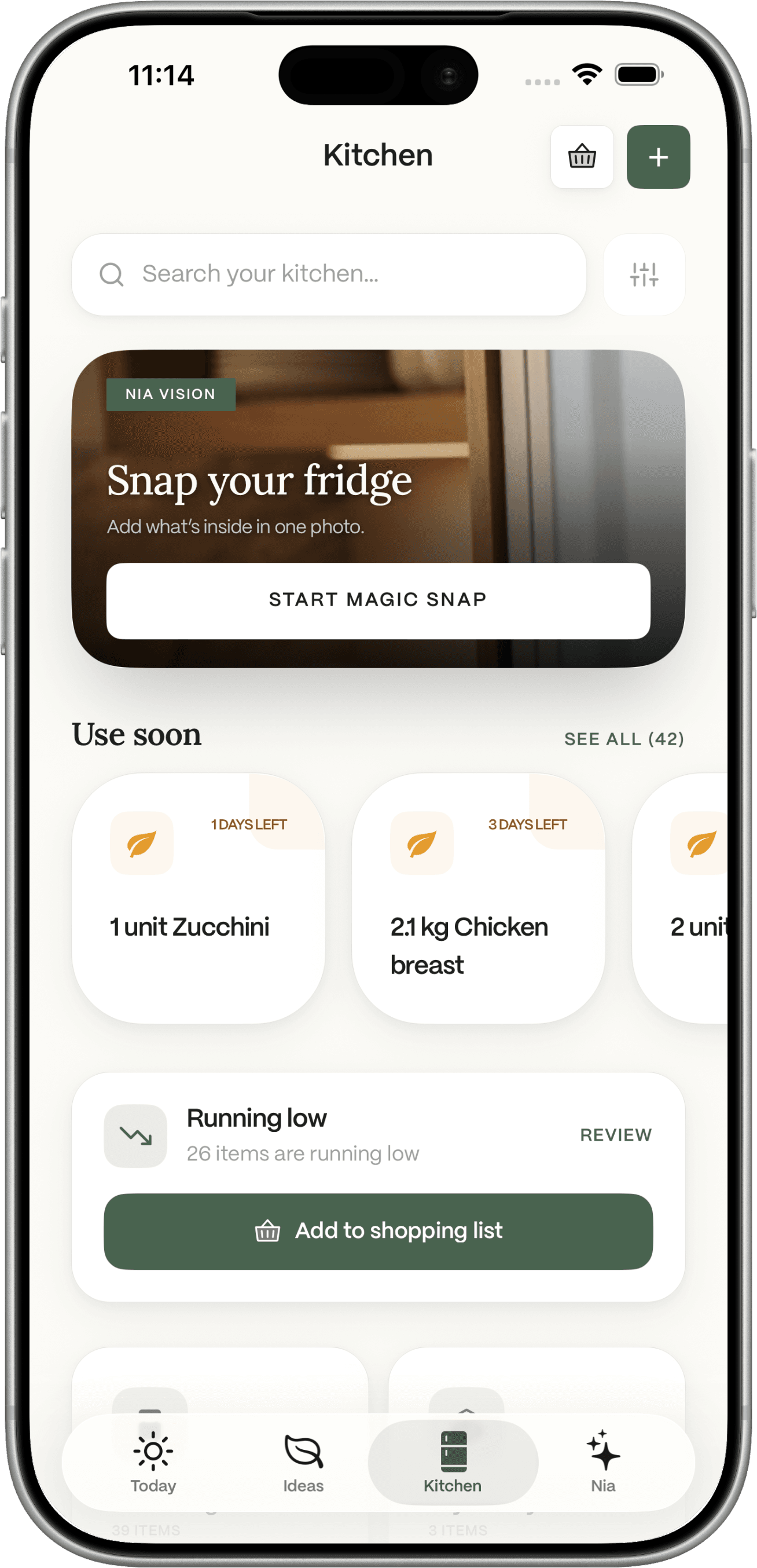
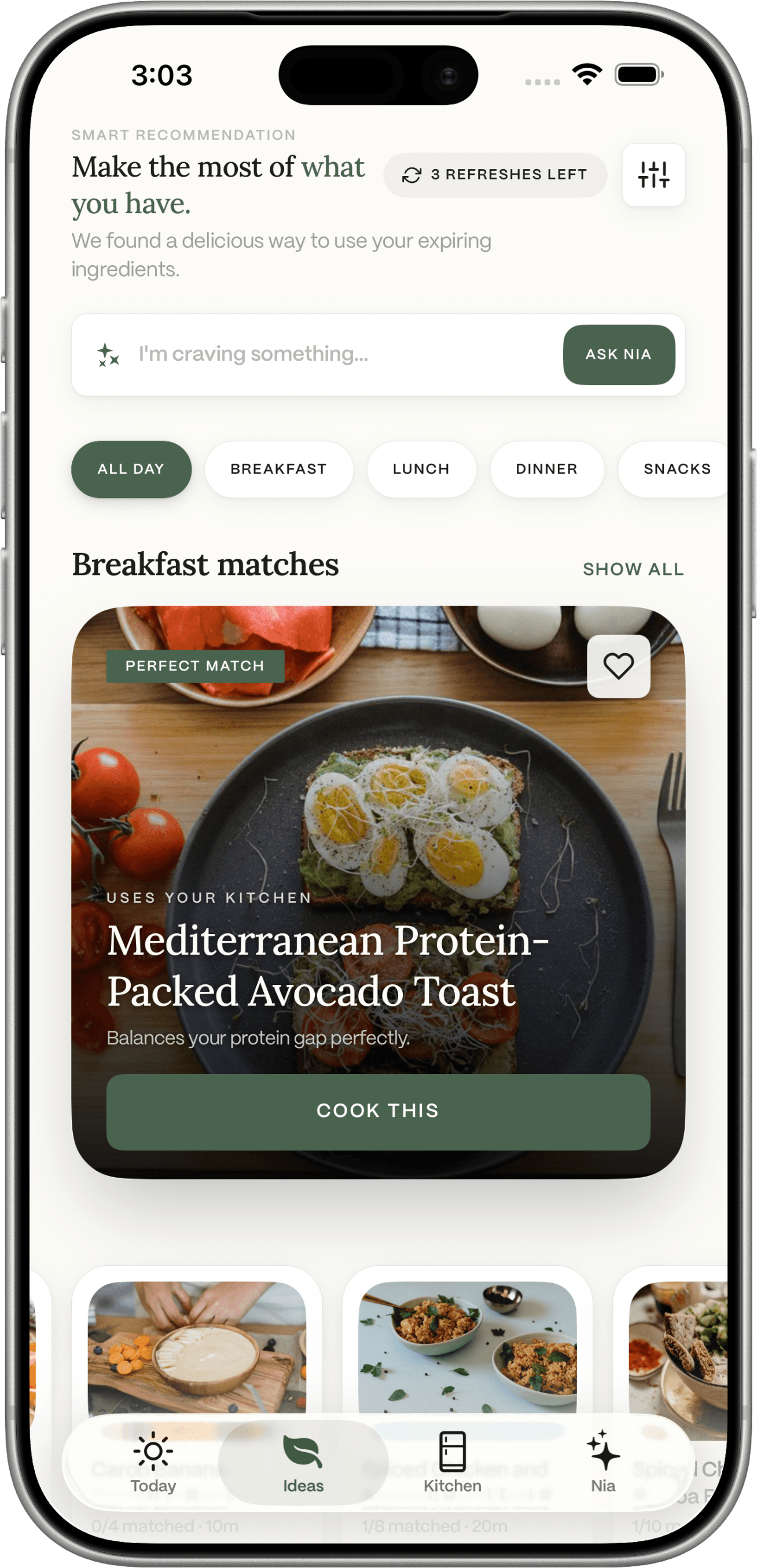
Dietrack is a food waste reduction app for people who want to use up what they have without it becoming a hobby. Snap your fridge or pantry once and Dietrack reads what's there, ranks ingredients by how soon they'll turn, and surfaces meal ideas that use those things first. Your grocery list reads from your inventory, so the third jar of cumin doesn't happen. Most of this is invisible — the result is a quieter bin, week over week.
How it works
Four quiet steps. Then it just runs.
Snap
Snap your kitchen
Open the camera at the fridge, pantry, or a receipt. The inventory builds itself.

Rank
Dietrack ranks by expiry
Each item gets a soft expiry estimate. The about-to-turn things float to the top.

Cook
Cook the about-to-turn first
Meal ideas using those items come up first. One tap to cook.

Shop
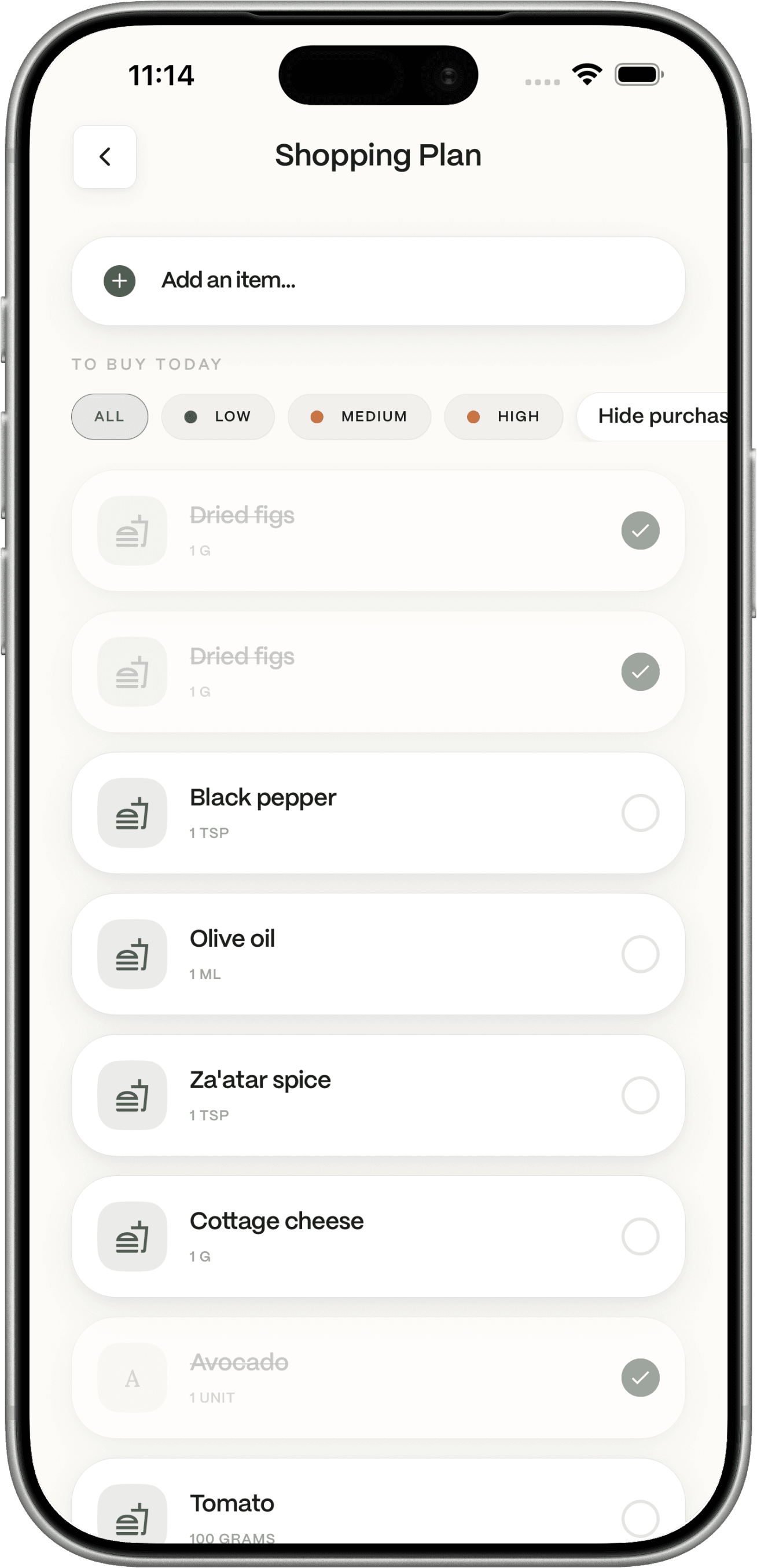
Shop only the gap
Your grocery list reads from your inventory; you stop buying what you have.

Sustainability, made practical
Three ways the bin gets quieter.
The lever isn't a notification. It's the inventory. When the kitchen knows what's there, the cooking, the planning, and the shopping all align — and what would have been food waste becomes Tuesday's lunch. Three things change quickly:
- The about-to-turn list. A view, opened once a day, of items in their last few days. Cook one and the list shortens.
- The grocery-list-as-gap. No more duplicate hummus. The list adds what the plan needs minus what you already have.
- The leftover loop. Cooked too much chicken? Mark it for tomorrow's lunch. Dietrack writes the meal idea around it.
Less to bin. Less to buy. The same week of cooking.
Less to throw out
Less to throw out.
Expiry-first sort
Each ingredient gets a soft expiry estimate. The urgent ones float up. See the pantry inventory.
Leftover-aware
Marked leftovers get a tighter window and meal-idea priority. See the fridge inventory.
“Use it up” suggestions
Meal ideas built around the about-to-turn items. Powered by the AI recipe generator.
Freezer rescues
Cooked too much? Mark it for the freezer; it comes back as a meal idea on a busy night.
Quiet nudges, no nagging
A small reminder when something hits day six. Never push at 7am.
and one more thing
Less to bin starts at the till.
Less to buy
Less to buy.
Grocery list as gap
The list = what the plan needs − what's in your kitchen. See the smart grocery list.
Pattern view
Monthly: “what did I buy three weeks running and barely cook?”
Cost-of-bin estimate
A rough estimate of what your throw-outs cost in a month. No guilt; just honest numbers.
Re-buy reminders that respect inventory
Coffee is low? Nudge. Cumin's already triplicate? Silence.
Shared lists for households
The forgotten yogurt isn't anyone's fault if everyone sees it.
Who it's for
A waste-cutting loop that fits everyday cooking.
THE EVERYDAY
For “I want to waste less without making it a project”
The whole point of Dietrack. The expiry-first view, the gap-only grocery list, and the leftover loop run in the background. You just cook.
THE FAMILY
For shared kitchens
One inventory, everyone sees the about-to-turn.
THE BUDGET
For the cost-of-bin
A rough monthly estimate of what your throw-outs cost.
THE PARENT
For “the kids didn't eat that”
Mark a leftover; it's tomorrow's lunchbox.
THE BATCH
For batch-cookers
The freezer view that doesn't get forgotten.
Why Dietrack is different
A food waste app that changes the bin, not just the notification feed.
| Capability | NoWaste | Yummly | AnyList | Pantry Check | Dietrack |
|---|---|---|---|---|---|
| Expiry-first inventory view | |||||
| Suggests meals using about-to-turn items | |||||
| Leftover-aware suggestions | |||||
| Grocery list reads inventory before adding | |||||
| Monthly “cost of bin” estimate | |||||
| Quiet nudges (no guilt notifications) |
Each app is named by its best-known representative; claims reflect each app's published default behavior as of mid-2026 and may change.
In plain English
What a food waste reduction app actually does — and what it doesn't.
A food waste reduction app is software that helps you throw less food out — usually by tracking what's in your kitchen and surfacing what to use first. The good ones quietly intervene at three moments: shopping, planning, and cooking. The bad ones send you guilt notifications and change nothing.
Dietrack does the quiet version. The pantry inventory and fridge inventory tag every item with a soft expiry estimate. The smart grocery list reads those inventories before adding what you "always buy". The meal planner from ingredients uses about-to-turn items first. None of it is a separate workflow — it's just how the app works.
If you've ever opened the fridge to find a forgotten container and felt the small ache of "I knew it was there", this is the app for you. Free on iOS and Android. See the FAQ for what's included, or read more on the blog about how Dietrack handles food waste in practice.
Frequently asked questions