Macros
Calories tell you how much energy you logged. Macros show where it came from.
Two 500 kcal lunches are not the same day. One might be mostly fat from a creamy sauce. The other might carry most of your protein. Dietrack shows protein, carbohydrate, and fat in grams against targets you can edit.


Free to download on iOS and Android.

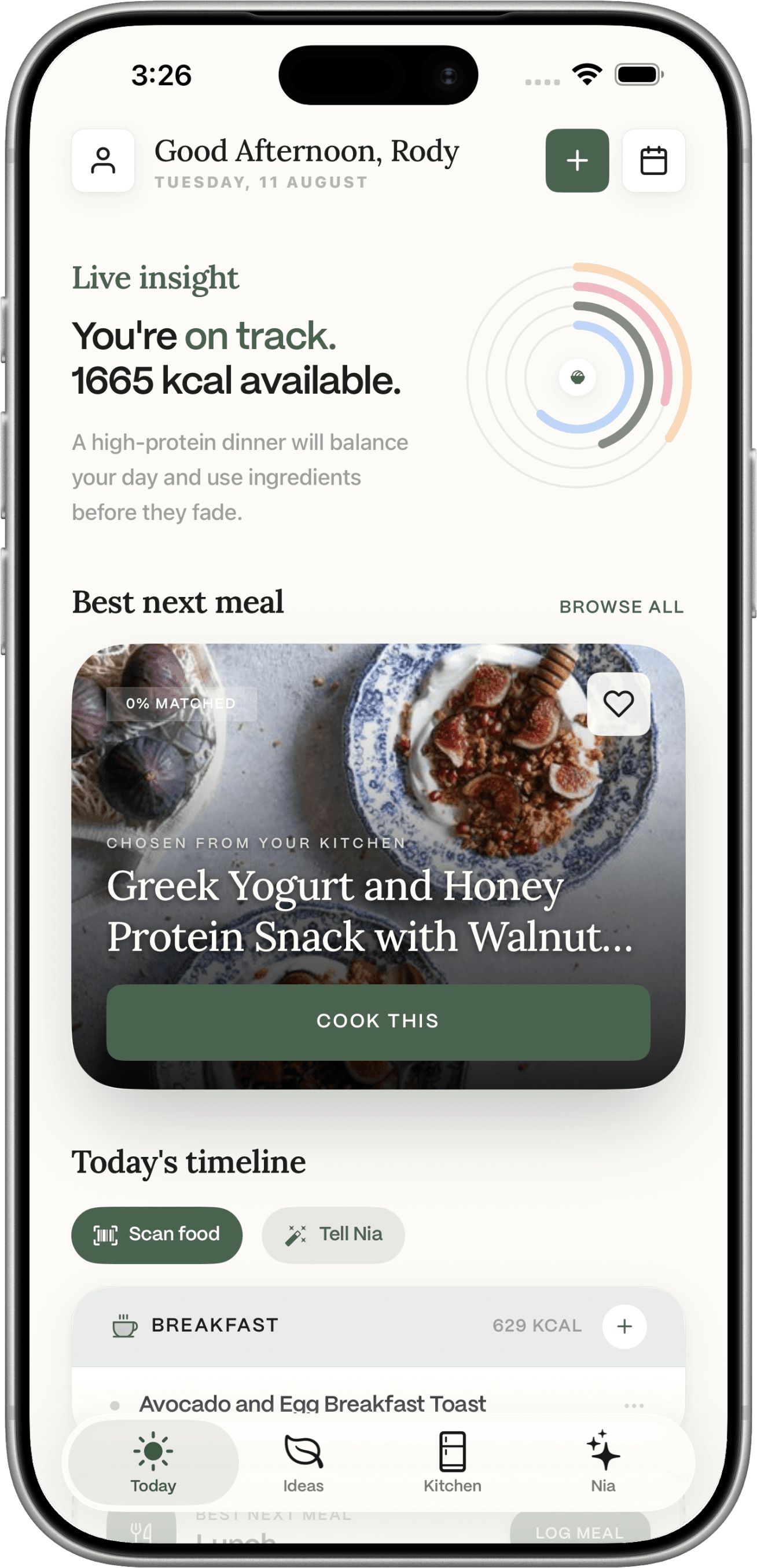
A calorie total can hide a protein gap.
Energy without composition
You can “hit calories” on toast and still be short of protein you cared about at breakfast.
Grams are easier to cook with than percentages
“About 30 g protein at lunch” is a plate. “35% of macros” is a spreadsheet.
The gym tracker that only knows barcodes
Home cooking still needs an estimate for the pan, then a log. Same paths as calories: idea, photo, barcode, search, numbers, Nia.
Same meals. A second reading of the plate.
What grams are for
Protein is the split most people actually need to see.
Calories are energy. Grams tell you whether that energy came from protein, carbohydrate, or fat. In a training context, a 2018 meta-analysis (Morton et al., British Journal of Sports Medicine) found that extra protein beyond about 1.6 g per kg of body weight did not add more fat-free mass from supplements during resistance training. That is a research ceiling in a specific setting, not a Dietrack prescription.
Dietrack shows estimated grams from the meals you log. It does not set a medical protein target. The practical write-up is how to set your macros.
A realistic lunch, read two ways.
Illustrative only. Your numbers will differ. Suppose leftover chicken, rice, spinach, and a spoon of yoghurt sauce.
Plate
Log the meal you ate
From an idea, a photo you review, or search. Change servings if you ate half.
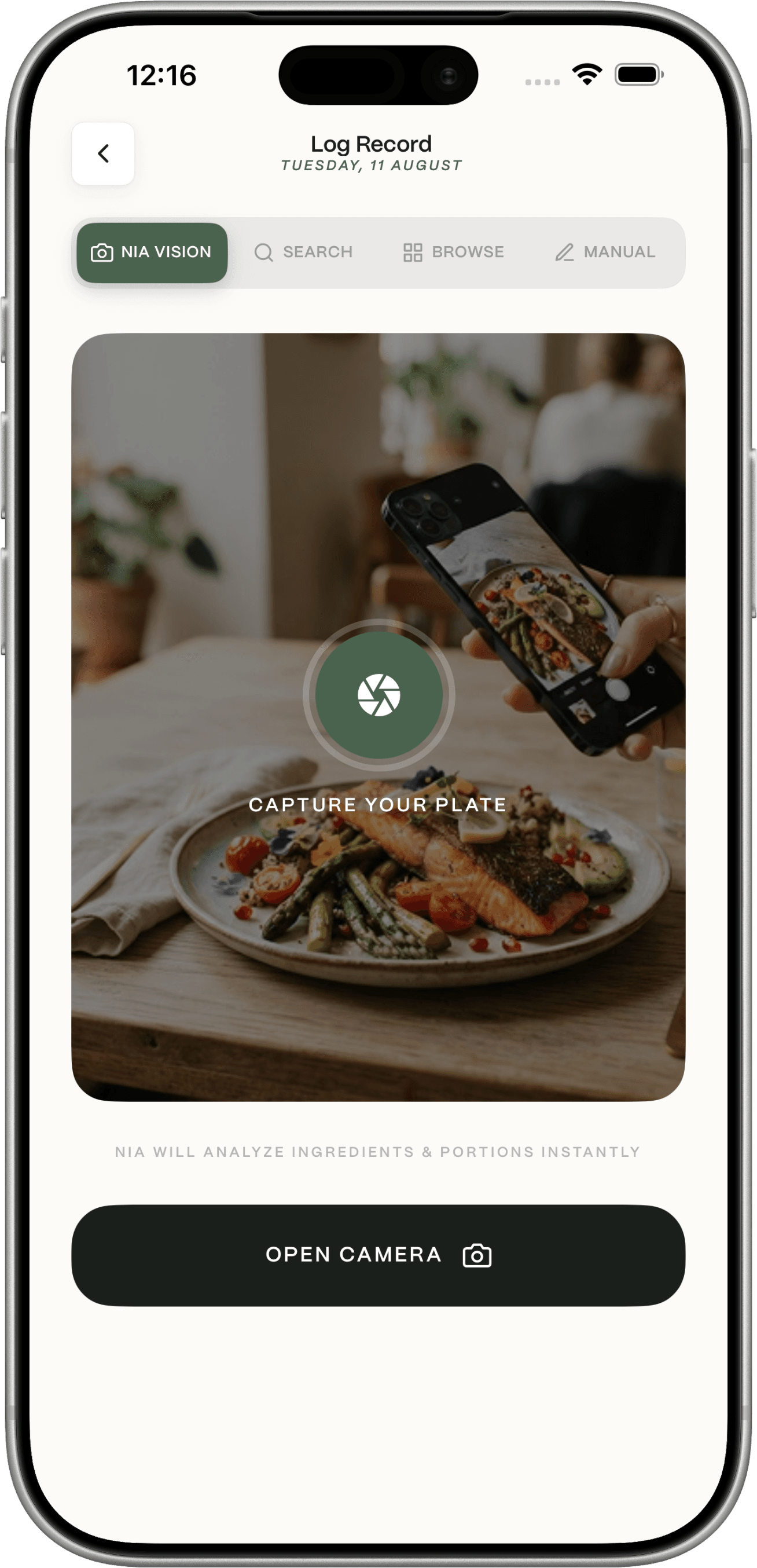
Energy
Calories move the daily total
Today compares logged energy with your calorie target. That is the headline number.
Split
Grams tell you what did the work
Protein from the chicken, carbohydrate from the rice, fat from the sauce. If dinner still needs protein, Ideas can aim at what is left. It will not guarantee you hit macros.
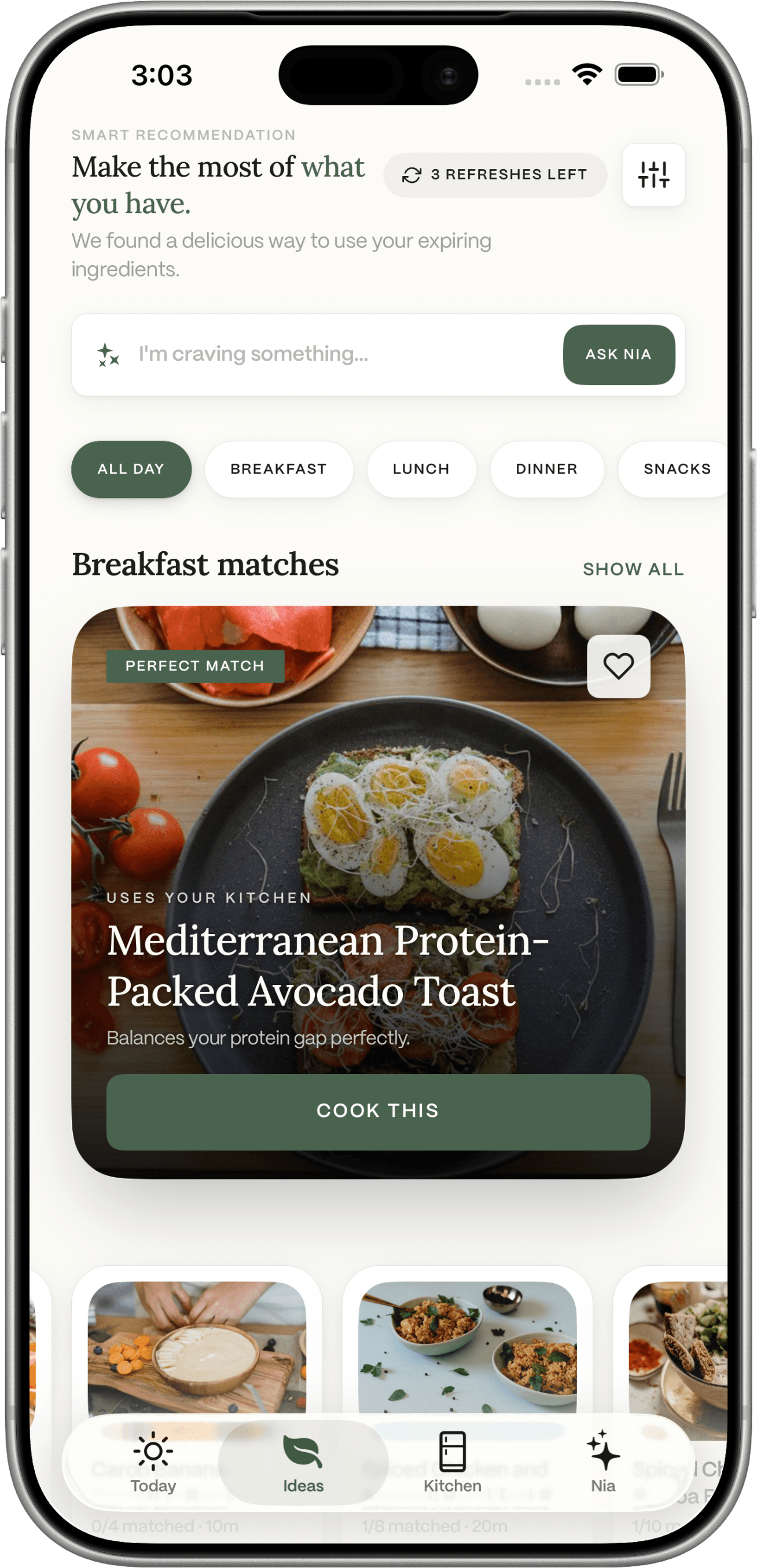
Macro rules in Dietrack.
On Today and on the meal
Daily grams versus targets, and per-meal estimates that scale with servings.
Targets are editable
Setup calculates a plan from the health goal you chose. You can change the grams.
Not protein-only software
Carbohydrate and fat sit next to protein. There is no coach voice about cheat meals.
Not daily micros
Do not expect a vitamin dashboard on Today.
Macro questions.
Nutrition values in Dietrack are estimates. Use them as a practical guide. Dietrack is not medical advice and does not guarantee macro targets.
Get the app
Read the plate as grams, not only as energy.
iPhone and Android. Manual tracking is free.