Weight-loss goal
If you chose to lose weight, the day still starts in the kitchen.
Dietrack is not a diet programme and does not promise a number of kilograms. If you pick a weight-loss goal, it sets a lower daily calorie target and can suggest meals that fit that target using food you already have.


Free to download on iOS and Android. Not medical advice.

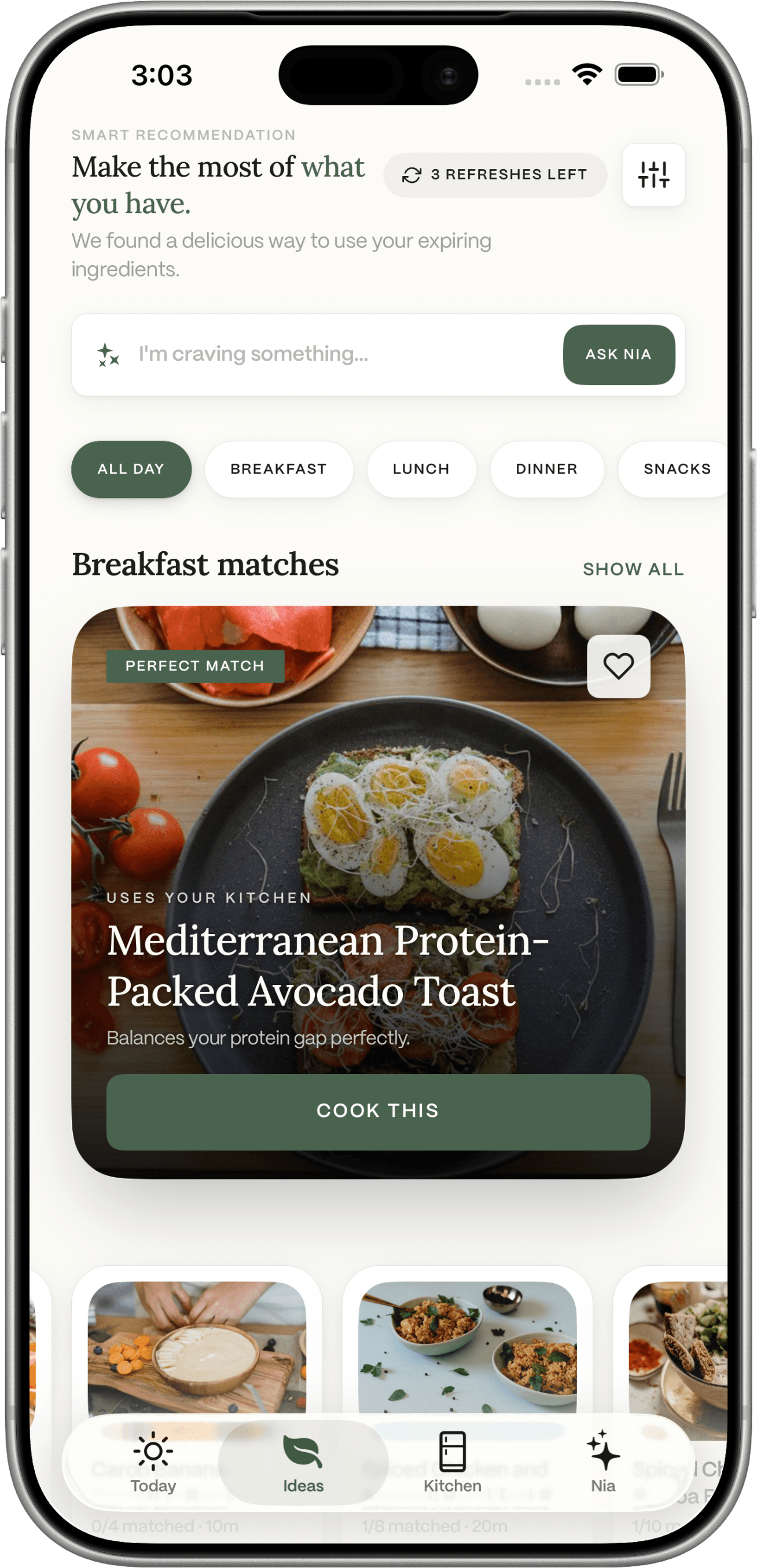
Most “weight-loss planners” throw out your kitchen and your cooking.
A clean-slate week of chicken
Dietrack does not offer a locked calorie-deficit week calendar. You generate a day. You cook what you will actually eat.
A scale that is treated as a verdict
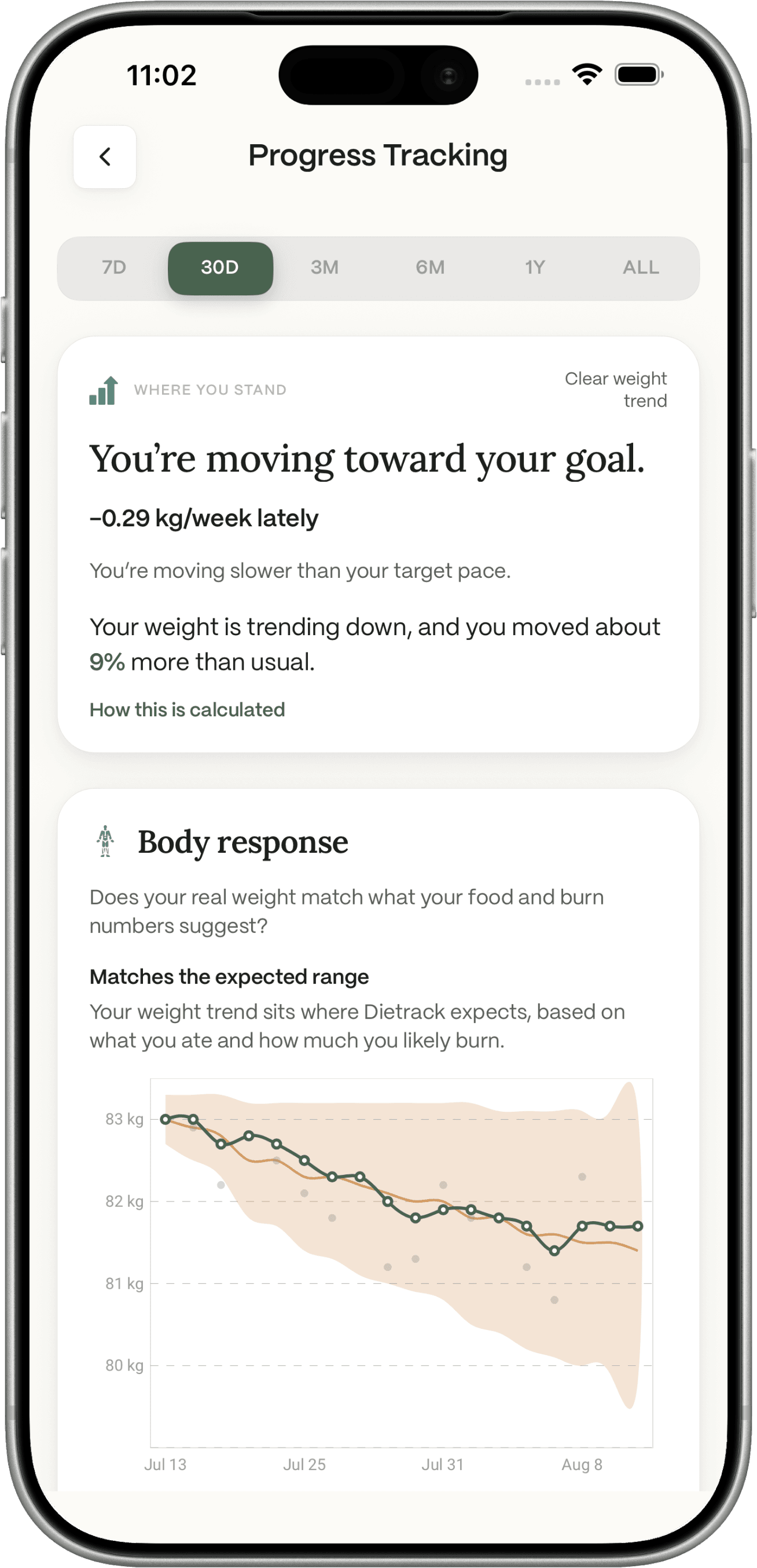
Progress can show whether weight trend is toward the goal you selected. It is not a medical monitor.
Targets that move because you walked
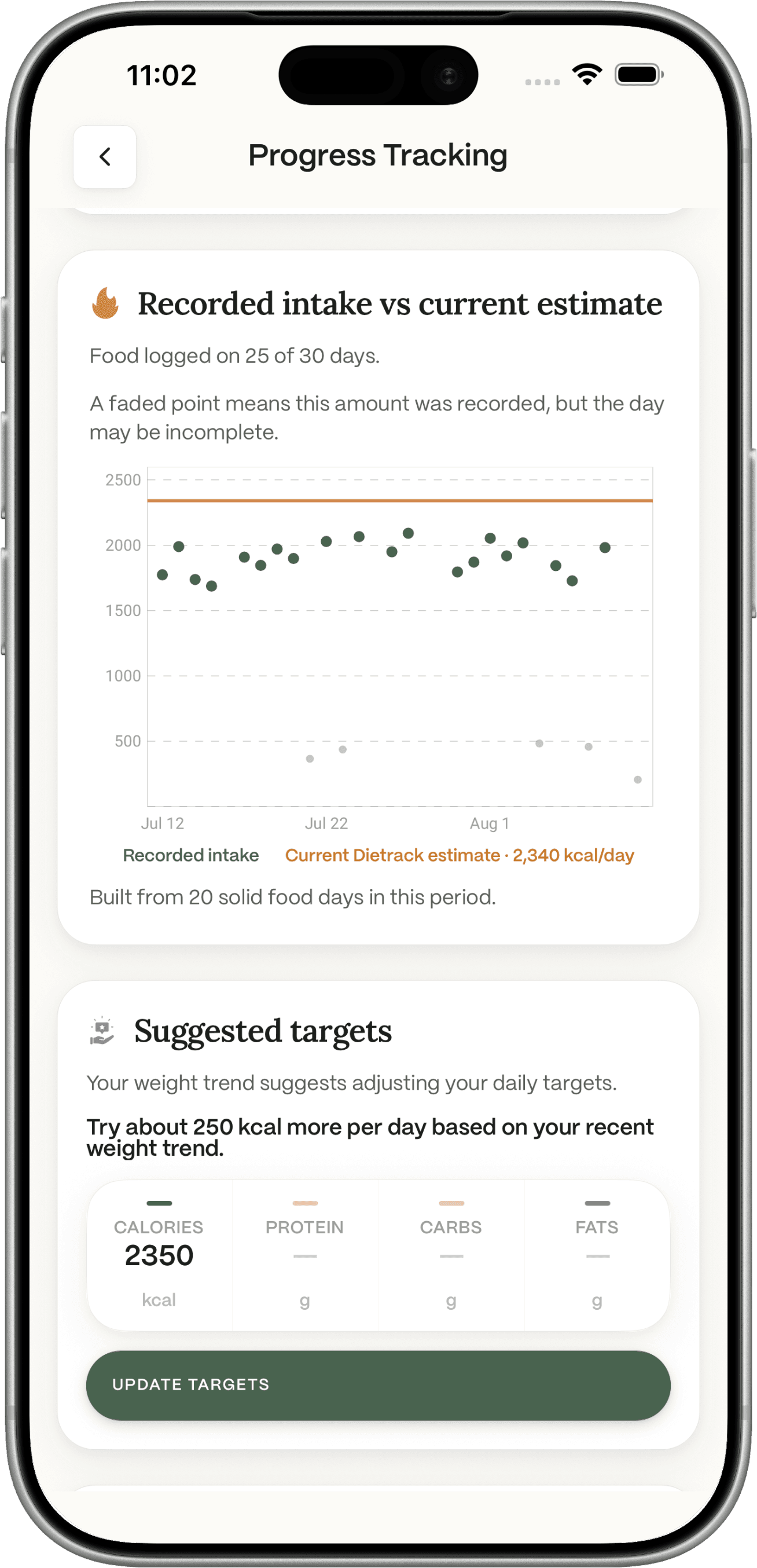
Optional Health data does not automatically raise calories. You can apply advisory tweaks from recent weight trend if you choose.
A lower target, kitchen-aware ideas, and a log you control.
What a deficit can and cannot promise
Energy imbalance is real. A weekly kilogram number is not a product feature.
A calorie deficit can reduce body energy stores over time. The old “3,500 kcal equals one pound” rule overstates how neatly that turns into kilograms on a given week (Hall et al., Lancet 2011). Water, glycogen, and adherence move the scale faster than fat does.
Dietrack can set a lower daily calorie target if you chose that goal, and can suggest kitchen-aware meals that fit it. It does not guarantee loss. Practical planning without pretending the app is a clinic: how to plan meals in a calorie deficit.
What the goal actually changes.
Setup
You pick the health goal
Weight goal is one of four health goals, not a typed target weight you must hit. The calorie number is calculated, then you can edit it.
Day
Ideas aim at what is left
Same Ideas engine as everyone else: kitchen first, missing items labelled, three refreshes. The difference is the remaining budget those ideas can aim at.
See
Log, then look at the trend
Today shows logged estimates. Progress can show weight over time and advisory copy. Dietrack does not treat obesity or supervise medical weight loss.
What this page will not sell.
No guaranteed loss
No kilograms, no timeline, no “clinically proven”.
No deficit-week product
No seven-dinner obedience calendar.
No eat-back from wearables
Health is optional context. It does not rewrite the target by itself.
No food guilt
No cheat-meal language. You log what you ate, or you do not.
Weight-loss questions.
If you choose a weight-loss goal, Dietrack sets a lower daily calorie target and can suggest meals that fit that target using food in your kitchen. Tracking and Progress can help you see how intake and weight trend over time. Results vary. Dietrack is not a medical weight-loss programme.
Get the app
A lower target. The same kitchen.
iPhone and Android. Estimates, not a guaranteed outcome.