The mistake after a grocery run isn't forgetting a recipe. It's thinking each dinner needs its own set of ingredients. Try planning around what you've just bought instead.
This is a manual method anyone can use. Dietrack's meal planner from ingredients follows the same kitchen-first principle in the app: use what you have, identify optional extras and don't pretend the fridge is empty.
Start with one example shopping bag
Suppose you came home with tomatoes, spinach, mushrooms, eggs, a tin of chickpeas and Greek yogurt. Your pantry also has rice, pasta, oil and seasonings.
Those ingredients could support multiple dinners rather than six unrelated recipes:
| Dinner | Main groceries used | Pantry support | Optional extra |
|---|---|---|---|
| Chickpea and tomato skillet | Chickpeas, tomatoes, spinach | Olive oil, garlic, spices | Bread or lemon |
| Mushroom and spinach pasta | Mushrooms, spinach, yogurt | Pasta, pepper, cooking water | Parmesan |
| Vegetable egg-fried rice | Eggs, mushrooms, spinach | Cooked rice, oil, soy sauce | Spring onion |
These are original illustrative meal combinations, not verified Dietrack-generated outputs or precise nutritional prescriptions. Cook eggs fully as appropriate, refrigerate perishables promptly, and don't use stored cooked rice that has been handled unsafely.
The five-minute unpacking method
- Put fragile foods first. Leafy greens and ingredients with short remaining shelf lives should be visible, not buried.
- Identify the flexible base. Rice, pasta, potatoes, bread and legumes give you different meal shapes from the same vegetables.
- Choose one dinner for tonight. Don't start by building an ideal seven-day schedule.
- Keep two fallback combinations. If your plans change, reuse the groceries in a skillet, soup, sandwich or grain bowl.
- Write down only what's missing. An ingredient you don't need shouldn't become an excuse for another full grocery run.
A useful meal plan needs fewer new purchases than the recipes you find at random.
If you have dietary restrictions
Check every ingredient, cooking sauce and packaged product against your actual dietary requirements. A recipe-generation model may suggest substitutes that don't meet an allergy requirement. Don't rely on an AI suggestion alone to establish allergen safety.
For vegetarian households, the chickpea skillet and mushroom pasta can be suitable if all optional ingredients and sauces meet the chosen diet. Protein and calories will vary by serving size, oil and brand; use Dietrack's nutrition approach to understand estimates rather than treat sample meals as guaranteed macro targets.
Use the groceries before another shopping trip
After cooking, the inventory should reflect what you've used. A grocery receipt is a useful shortcut to enter what was purchased, but it doesn't update itself when someone eats the spinach.
If you prefer not to type everything, see our receipt-photo to kitchen-inventory walkthrough.
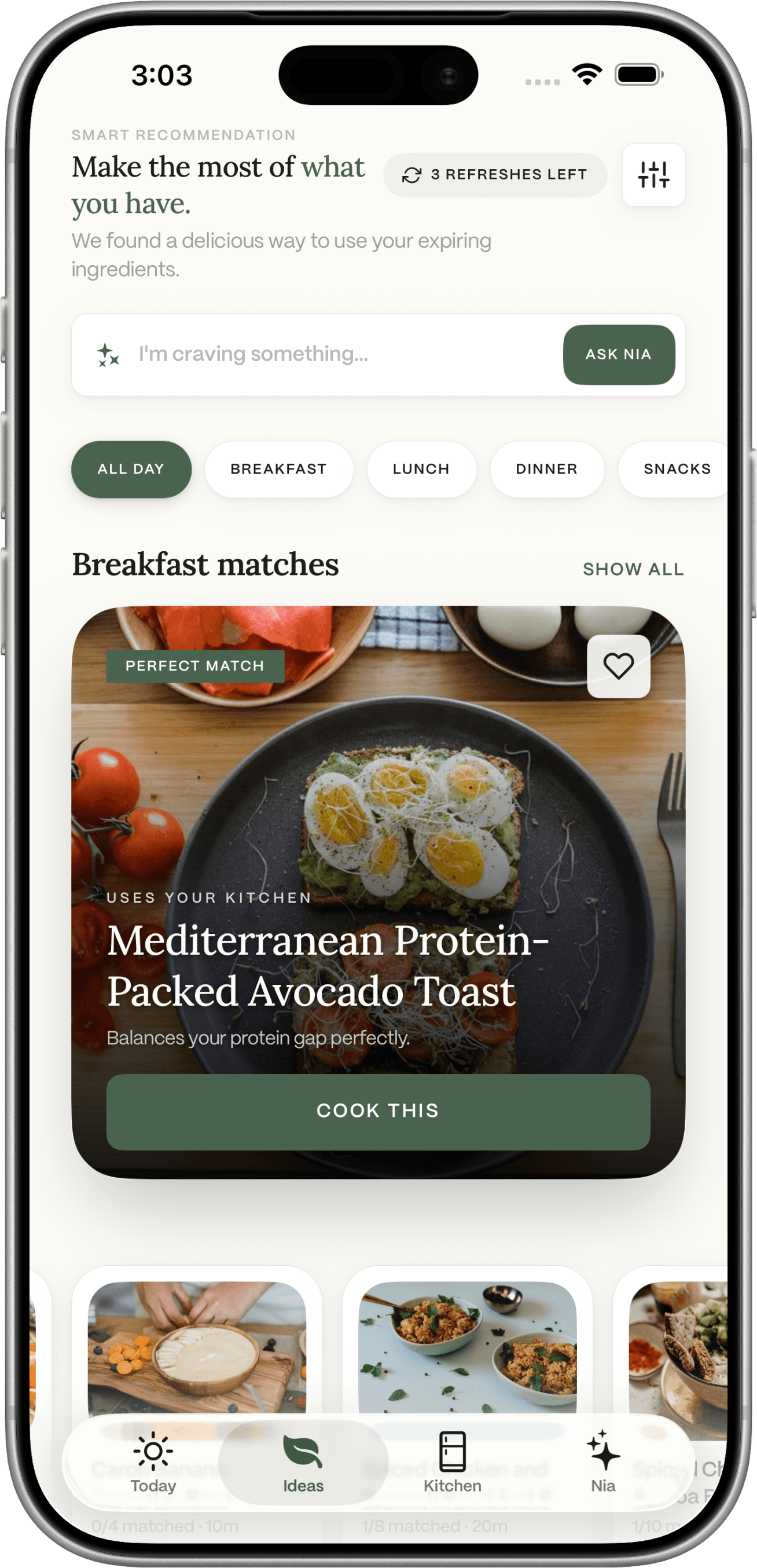
Dietrack can suggest meals from your saved kitchen and preferences, with missing extras labelled where applicable. The image shows the app's Ideas interface, not a promised result for the example grocery bag above.
A small decision that saves tomorrow's effort
Before closing the fridge tonight, ask: Which ingredient becomes harder to use if I wait? Put it where you'll see it, and make that one part of tomorrow's meal.
That is the practical benefit of keeping a fridge inventory: it doesn't cook for you, but it stops every dinner decision from starting at zero.